
Rug Colors Guide: Material Intelligence & Spatial Design
Color in design is not decorative overlay but structural fact. To select the color of a rug or carpet is to establish the atmospheric foundation of a room, the datum against which furnishings, light, and movement will register. It determines not only visual temperature but the perceived dimensions of space, the behavior of sound, and the distribution of weight. The rug color is, in this sense, an architectural decision.
This is a question of material intelligence before aesthetic preference. The chromatic life of a textile begins in fiber preparation, in the molecular structure of wool or silk, in how natural materials accept and hold dye. What appears as a uniform tone in industrial carpet production becomes, in handwoven work, a field of tonal variation. Light strikes the surface at shifting angles. Density fluctuates with the weaver's hand. The result is not a single color but a chromatic atmosphere, one capable of coexisting with other elements without visual conflict.
The principles that follow examine rug color through three lenses: material behavior and fiber chemistry, spatial and atmospheric consequence, and temporal durability. Each consideration informs the others, creating a framework for chromatic decision-making that privileges material honesty and spatial intelligence over transient aesthetic trends.


Fiber behavior and chromatic depth
Natural fibers absorb dye differently than synthetic alternatives. Wool, with its scale structure and lanolin content, produces depth that cannot be replicated through chemical pigmentation alone. In natural wool fibers, dye penetration varies between 15-20% across the pile surface due to micro-variations in fiber diameter and crimp. Under close observation, what reads as gray reveals itself as a composite of charcoal, stone, and pale ash. Terracotta contains burnt sienna, clay, and traces of ochre. This micro-variation is what allows a rug to sustain prolonged attention without fatigue.
In collections where color emerges from material research rather than trend analysis, the palette develops through iterative dialogue with the textile itself. Certain hues reveal themselves as structurally coherent with specific weaving techniques. Others resist integration, exposing limitations in fiber tension or dye penetration. This resistance is not failure but information, a form of material feedback that shapes the final range.
This material-first methodology informs G.T.DESIGN’s handwoven collections, where undyed wool yields warm grays and natural ivories, while vegetable dyes produce earth tones with inherent complexity. Rust, sand, lichen green, indigo that shifts between blue and black depending on light conditions. These are not colors selected from a catalog but arrived at through technical investigation, through understanding what the material can sustain over decades of use.


How to choose colors for different rooms
The selection of rug color in interior design cannot be separated from questions of light quality, ceiling height, and spatial proportion. The rug establishes the horizontal plane of a room, and its color therefore shapes how volume is perceived and how boundaries are read.
In living spaces with northern exposure, where daylight remains diffuse and cool, darker tones provide necessary visual weight. Charcoal, graphite, or deep moss anchor furnishings and prevent the room from feeling unmoored. Conversely, in south-facing interiors where light is abundant and direct, pale carpets in sand, stone, or undyed wool amplify luminosity without overwhelming the eye.
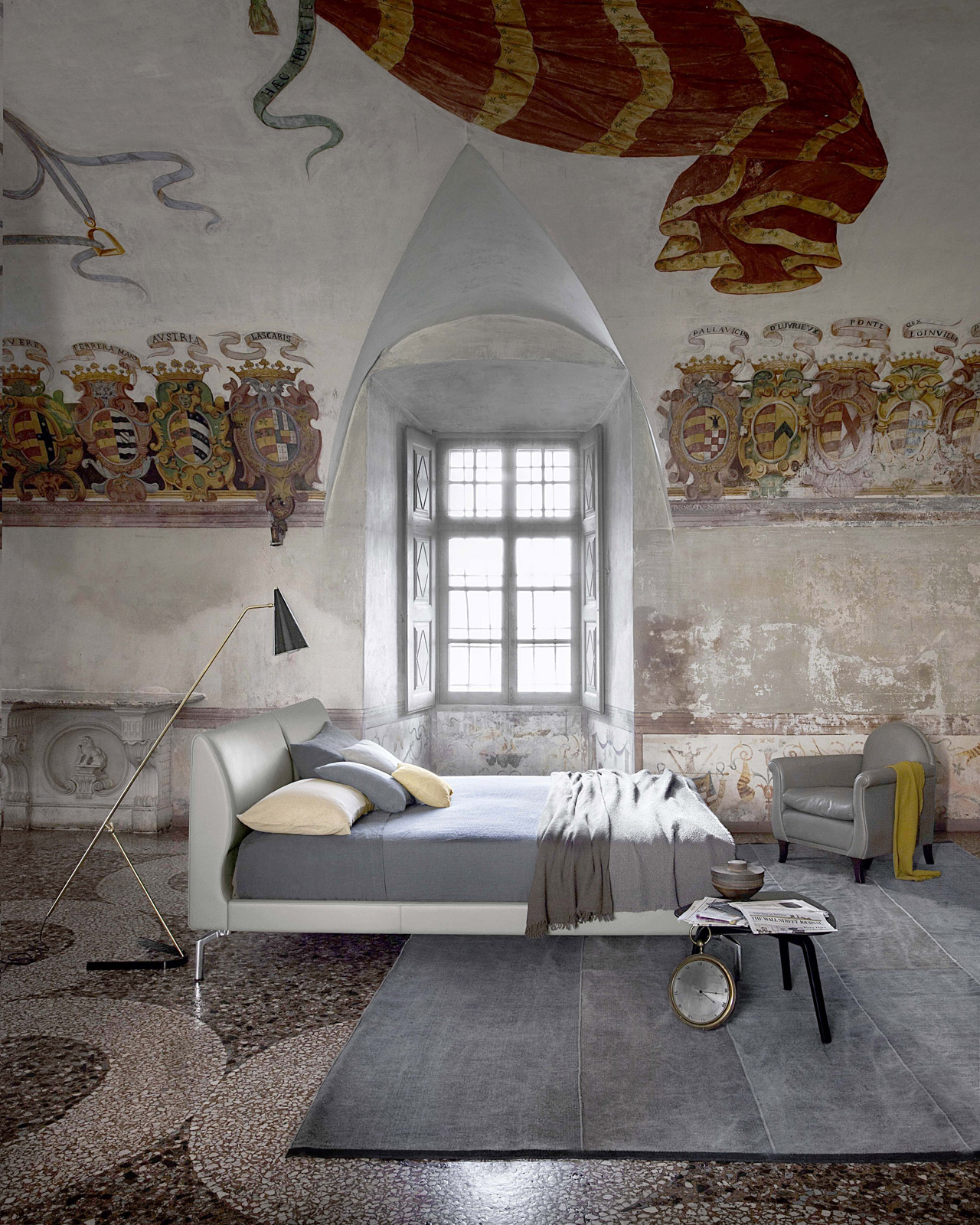
For bedrooms, warm neutrals in clay, taupe, or soft gray create tonal continuity with walls and textiles, dissolving visual boundaries and expanding perceived space. The question becomes less about color selection and more about achieving thermal equilibrium, a chromatic temperature that supports rest rather than stimulation. Cooler grays and blue-grays work in warmer climates or south-facing bedrooms, while warmer beiges and taupes compensate for limited natural light in northern rooms.
In open-plan environments, where traditional architectural divisions have been minimized, carpet color becomes one of few remaining tools for establishing zones. A shift from warm gray to cool beige can articulate the boundary between dining and seating areas without physical barriers, allowing circulation to remain fluid while hierarchy is preserved. The question of scale also governs color choice. Lighter carpets expand volume, particularly in rooms with lower ceilings. In spaces under three meters in height, pale stone or sand tones prevent the ceiling from pressing downward visually. Darker tones contract space but increase intimacy, making them suited to larger rooms that risk feeling indeterminate.

Light condition and atmospheric calibration
Light behavior varies not only by orientation but by geography and season. Mediterranean interiors, with their intensity of sunlight and whitewashed walls, demand carpets that can absorb rather than reflect luminosity. Earth tones in terracotta, ochre, or burnt umber introduce warmth without competing with the brightness of the space. In northern European contexts, where daylight is scarce and often gray, the same palette would read as heavy or oppressive. Here, cool grays, pale blues, and stone tones maintain clarity and prevent the interior from collapsing into dimness.
This climatic sensitivity extends to artificial lighting as well. Incandescent light warms colors, intensifying reds and yellows while muting blues. LED illumination, particularly in cooler temperatures, can render warm neutrals flat or lifeless. A carpet color must therefore accommodate not only the room’s natural light but the artificial conditions that will govern its appearance after dark.
In projects requiring precise atmospheric control, such as gallery spaces or residential interiors with significant art collections, neutral grays in mid-tones provide stability without chromatic interference. G.T.DESIGN’s monochromatic Tencel series demonstrates how gray can range from cool graphite to warm taupe within a single palette, allowing designers to calibrate spatial temperature with precision while maintaining material consistency.


Compositional relationship: carpet color and surrounding elements
The carpet does not exist in isolation but in constant dialogue with walls, furnishings, and architectural detail. When carpet color closely matches wall tones, boundaries dissolve and space reads as continuous. This approach suits smaller rooms where expansion of perceived volume is desirable, or minimalist interiors where tonal uniformity supports spatial clarity.
Chromatic contrast between floor and wall defines edges and articulates transitions. A charcoal carpet against warm white walls establishes clear horizontal and vertical planes, grounding the room while maintaining lightness above. This strategy works particularly well in spaces with generous ceiling heights, where dark floors anchor without oppressing.
The relationship between carpet color and upholstery requires similar consideration. A neutral carpet in beige or taupe allows furnishings in deeper colors or complex patterns to register clearly, functioning as visual ground rather than figure. Conversely, a carpet in saturated earth tones or deep charcoal may necessitate lighter upholstery to prevent the room from collapsing into tonal heaviness. The question is one of compositional balance: where does visual weight accumulate, and how is it distributed across horizontal and vertical surfaces?


Should carpets be lighter or darker than walls?
Carpets lighter than walls expand space visually. Carpets darker than walls define boundaries and ground furnishings. The choice depends on whether spatial expansion or definition is prioritized.
Tonal continuity between floor and wall dissolves boundaries, creating a sense of openness and flow. This approach suits contemporary interiors where architectural transparency and spatial generosity are valued. When carpet and walls share similar values, both in pale stone or both in warm gray, the room reads as a single volume rather than a composition of discrete surfaces.
Chromatic contrast defines edges and can make a room feel more composed, more deliberately bounded. A dark charcoal rug against pale walls creates strong horizontal definition, grounding furnishings and establishing clear visual hierarchy. Neither approach is universally superior. Both are tools for shaping perception.


What rug colors make a room appear larger?
Lighter tones reflect more light and therefore expand perceived volume. Pale grays, soft ivories, and sandy beiges recede visually, allowing the eye to move uninterrupted across surfaces. In smaller rooms or spaces with limited natural light, these lighter neutrals prevent the floor from asserting itself as a separate, bounded plane.
Darker colors absorb light and draw the floor plane closer, reducing apparent scale but increasing material presence. A deep charcoal or moss-toned rug makes the floor more tangible, more present as a surface. This can be desirable in larger rooms that risk feeling indeterminate, or in spaces where intimacy and enclosure are valued over expansiveness. The choice is not only about size but about whether space should feel generous or contained, weightless or grounded.


How does natural fiber affect rug color depth?
Wool's ability to hold multiple layers of dye produces chromatic complexity that evolves with light and viewing angle. A single application of vegetable dye on wool rarely yields uniform color. Instead, the fiber's natural variation in thickness and structure creates subtle gradations. This depth allows the carpet to respond to changing light conditions throughout the day, appearing warmer in morning light, cooler under afternoon shadow. In northern latitudes above 45 degrees, where winter daylight hours can drop below eight hours, the choice of rug color becomes critical to maintaining interior luminosity. Cool grays, pale blues, and stone tones maintain clarity and prevent the interior from collapsing into dimness.
Silk reflects more luminosity, intensifying color saturation but reducing tonal variation. A silk carpet in deep blue will appear more vivid, more jewel-like than the same color in wool, but it will also read as flatter, less materially complex. Linen and cotton absorb dye more evenly, yielding more uniform tones suited to interiors where chromatic consistency is desired.
G.T.DESIGN's use of vegetable dyes in handwoven production yields colors that deepen rather than fade over decades. In terracotta and ochre collections, exposure to light intensifies rather than diminishes chromatic presence.


Why do neutral colors work in contemporary interiors?
Neutrality in this context does not mean absence of color but restraint in saturation. Gray, beige, taupe, and stone are not passive backgrounds but active participants in spatial composition. They provide stability without insistence, allowing other elements to assume prominence while maintaining tonal continuity.
In interiors where art, furniture, and light are variable, neutral rugs offer the constancy required for coherence. A mid-tone gray rug remains legible whether the room contains minimal Scandinavian furnishings or more ornate Italian pieces, whether the walls are hung with contemporary photography or left bare. This adaptability is not aesthetic compromise but spatial intelligence, the recognition that certain elements must remain stable if others are to evolve.
The best neutral colors for modern spaces are those with chromatic complexity rather than singular purity. A gray that contains traces of blue or brown, a beige that shifts toward clay or sand depending on light. These are neutrals that sustain interest over time, that reveal rather than exhaust their visual content through prolonged exposure.


Durability as chromatic strategy
A rug's lifespan extends across decades. Its color must therefore accommodate not only present conditions but future reconfigurations of furnishings, lighting, and use. This temporal dimension argues for chromatic restraint, for colors that gain rather than lose interest through prolonged exposure. Certain hues age well. Grays deepen. Ochres soften. Blues acquire warmth.
The difference often lies in complexity rather than saturation. A color built from overlapping dye layers, from tonal nuance rather than singular clarity, offers more to sustained attention. This principle aligns with broader values in contemporary design, which increasingly favor environments that develop character through time rather than announcing their intentions immediately.
FAQ
For spatial expansion: Choose rugs in pale gray, ivory, sand, or stone tones that reflect light and recede visually.
For spatial definition: Choose rugs in charcoal, graphite, deep moss, or saturated earth tones that ground furnishings and establish boundaries.
For northern light conditions: Prefer cool grays, pale blues, and stone tones that maintain clarity in diffuse daylight.
For southern or Mediterranean light: Prefer earth tones in terracotta, ochre, and burnt umber that absorb rather than reflect intense luminosity.
For longevity: Prioritize colors with chromatic complexity from vegetable dyes and layered tonal information rather than single pure hues.
For contemporary interiors: Choose neutral rugs with complexity (gray containing blue or brown traces, beige shifting toward clay or sand) that sustain interest over time.
The carpet is where the body meets architecture, where domestic life literally takes place. Its color should reflect this foundational role through visual stability and material honesty, through depth that reveals itself gradually rather than all at once. The considerations outlined here suggest further investigation into specific applications and regional contexts. For those seeking to understand how chromatic decisions translate across different residential spaces, extended examinations of room-specific strategies and geographic variations in light offer continued engagement with these principles in practice.
Further Explorations:
he relationship between rug color and architectural context extends into specialized applications. The material considerations outlined here inform approaches to contract interiors, historic renovations, and coastal environments where environmental factors intensify. Questions of pile height, weaving density, and surface treatment introduce additional variables in color perception and longevity.
If you’re working on a project and need some advice, please get in touch: we’ll help you find the right shade for your space.